Chuks E.

7 Common Myths About NGOs (And the Real Story Behind Them)

When people hear the word NGO, the mental images are usually extreme. For some, it’s heroic rescue missions with helicopters swooping into disaster zones. For others, it’s endless board meetings, cold coffee, and people arguing about budgets. The truth? It’s way more dynamic, human, and impactful than most people realize. Let’s clear up some of the most common misconceptions about NGOs and the humanitarian sector. Myth 1: NGOs are just about giving free stuff Reality check: Sure, some NGOs hand out food, clothes, and other essentials when emergencies strike. But a lot of the real work happens beyond that. NGOs provide education programs, leadership training, small business development, clean water systems, and even pushing for policy reforms. At Genach Incorporation, for example, we spend as much time building long-term opportunities and create value. The goal is not just to help people survive but to create systems that can help them create better lives for themselves.   Myth 2: Everyone working in NGOs is a volunteer Reality check: Reality: Volunteers are the heartbeat of any NGO, they are amazing (and essential)., but running an organisation takes a lot more. From managing complex projects to negotiating partnerships, a lot of this work requires full-time staff. And yes, many NGO staff get salaries, benefits, and career growth just like in other industries. So next time you meet someone who works at an NGO, don’t just say “oh, that’s nice volunteer work.” It’s a professional career path too. Myth 3: NGOs misuse donations Reality check: This one comes up a lot. The stereotype of donations being wasted or financing someone’s luxury lifestyle is a tough one. And yes, like in every industry, there are bad eggs. But credible NGOs are obsessed with accountability. They conduct audits, share reports, and keep transparency front and center. At Genach, for example, we make sure donations go directly into programs, and yes, some of it covers operations (because someone has to pay the internet bill), but that’s what keeps the mission running.   Myth 4: NGOs are loaded with cash anyway Reality check: Contrary to what people think, NGOs don’t have vaults stacked with cash. Every project needs funding, and without community support, many programs simply won’t exist. Donations from the big corporate gifts down to the “smaller” individual contributions are what keep life-changing initiatives moving.   Myth 5: All NGOs are scams   Reality check: Like in any sector, there are a few bad apples. But most NGOs are run by passionate people who sacrifice a lot to keep things moving. A good way to cut through the doubt? Do your research, ask questions, and if possible, volunteer with them before donating. You’ll quickly see the difference between talkers and doers.   Myth 6: It’s better to give directly to the poor than to NGOs Reality check: If you know someone who is in desperate need and are in a position to assist that person, then make sure you do that. Some people also believe that giving to beggars is better than donating to an NGO. But, are you sure that the beggars will spend that money on the right cause? Chances are higher that he might spend the money on alcohol and then beat up his wife in his drunken stupor. On the other hand, NGOs invest a significant amount of time in selecting the beneficiary and ensuring proper utilization of funds. Myth 7: Only big donations matter Reality Check: Not true. Small and medium-sized donations are the backbone of most NGOs. One person’s “little” monthly contribution might buy school supplies for a child or help keep a clean water system running. At Genach Incorporation, we’ve seen how consistent small gifts can build lasting impact. Big donors are great, but real change is built on collective effort. When someone hits you with negative stereotypes about NGOs, challenge them with the right questions. NGOs face countless obstacles in turning their ideas into action, and it takes immense passion and dedication to inspire volunteers and supporters. It’s easy to sit back and criticize their methods or question their work from the outside. But when you join the cause and witness their efforts firsthand, you’ll quickly realize the profound impact they have on society.    

7 Common Myths About NGOs (And the Real Story Behind Them) Read More »
Who Really Counts as a Philanthropist?

For some reason, whenever the word philanthropist comes up, people’s minds jump straight to billionaires signing cheques with enough zeros to make your head spin. The image is usually celebrities holding babies in rural villages for the camera.celebrities posing with oversized donation receipts, or the mega-rich setting up foundations in their names. And while those people have indeed given on a scale most of us can hardly imagine, reducing philanthropy to wealth alone is a mistake that makes a lot of ordinary givers shrink back from the word. The word “philanthropist” comes from Ancient Greek, combining “philo-” (meaning “love” or “fond of”) with “anthropos” (meaning “humanity” or “humankind”). A philanthropist, at its core, is a lover of humanity, someone who expresses this love by donating time, money, or resources to help others and make the world a better place. The truth is, philanthropy isn’t just about how much you give but how you give, and why. It’s less about the size of your bank account and more about the size of your heart. When someone pays the school fees of a neighbour’s child, volunteers to teach skills at a youth centre, or chooses to buy from a struggling small business instead of a big supermarket, that, too, is philanthropy. They may never be on magazine covers or trending hashtags, but the impact is still real. In fact, some of the most powerful philanthropy has come from people who were never rich. Communities that band together to rebuild after a flood. Teachers who spend their own salaries on chalk and books. Parents who open their homes to children that aren’t theirs. These acts don’t look like grand gestures in the newspapers, but they stitch the social fabric tighter than any big cheque ever could. Why We Think Philanthropy Belongs to the Rich Psychologically, people are wired to associate impact with visibility. When we see a wealthy person donating publicly, the sheer size of the gift impresses us. It makes us equate “big numbers” with “big love.” But what we often forget is that true generosity isn’t about the amount, it’s about the sacrifice. For someone who earns a million dollars, giving away a hundred thousand might barely sting. For someone earning much less, offering even five dollars could mean skipping a meal. Yet, society tends to celebrate the first and overlook the second. There’s also the “all-or-nothing” mindset. Many people think, “If I can’t give big, then my giving doesn’t matter.” It’s why people hold back from helping, assuming their contributions are too small to count. But here’s the paradox: it’s the accumulation of those “small” acts that builds lasting change. Think about community schools, women’s cooperatives, or local food drives. These movements weren’t started by billionaires; they were born out of everyday people pooling little bits of love and resources together. Why This Shift in Thinking Matters When we only see philanthropy as the territory of the rich, we rob communities of ownership. We also rob ourselves of the chance to participate in shaping change. Social psychology calls this the “bystander effect”: when people assume someone else (often someone wealthier or more powerful) will step in, they feel less responsible for helping. But when you flip that mindset,when you realize that your small, steady contribution is philanthropy, you start to act differently. You start to believe you can move the needle. So, Who Is a Philanthropist? It’s the grandmother, the taxi driver, the retired teacher, the student who donates their lunch money to help a friend, the family who chooses to spend weekends volunteering. It’s you, when you choose to invest time, money, or energy into making someone else’s life better. At Genach Incorporation, we believe philanthropy isn’t about waiting until you’re rich or famous enough to make a splash. It’s about practicing love of humanity in your own lane, in your own way, with what you have. The truth is, the most transformative change often starts small, and often starts with ordinary people refusing to sit it out. So, the next time you hear the word philanthropist, don’t shrink back. You don’t need a billion-dollar foundation to earn the title. Sometimes, all it takes is a heart willing to give.   HOW TO CHANGE THE WORLD: ONE PERSON CAN MAKE A LASTING IMPACT. “Be the change you wish to see in the world.” Most of us have heard this quote by Mahatma Gandhi and perhaps even been inspired by it. It’s a beautiful sentiment and one that reminds us how everyone has the power to make an impact. Whether it’s by volunteering at a food bank, starting a nonprofit, or caring for your kids, what you do today can lead to lasting change. But sometimes when we hear about so many global issues on the news, it can be difficult to believe that just one person can make a difference. Luckily, social change doesn’t have to happen instantly or on your own. By working together with your community to change lives one day at a time, your actions can have a meaningful impact. If you’re interested in making the world a better place, read on to discover how one person can change the world and what makes a social change project successful. Then, discover a few tips on how you can change lives for the better. How Much Can We Really Make an Impact in Our World? For as long as humans have been around, we’ve been asking ourselves questions about our purpose in life and how we can best fulfill it. These existential questions seem to be a part of human nature and often drive people to start social innovation projects so they can leave a meaningful mark on the world. But sometimes, it’s hard to see what difference one person can make and how we can help our local and global communities. Even if you’re not trying to solve world hunger or global warming, brainstorming ways to help your community can make a big difference. When

Who Really Counts as a Philanthropist? Read More »

Should Charity Be Anonymous? Or Does Public Giving Matter Too?

There’s always been this debate about the nature of giving, should it be something private, or should it be done out loud, visible, public? Some people will argue, and not without reason, that the highest, purest form of charity is the one that’s done quietly, away from the eyes of applause. The kind where the giver walks away and no one but the receiver knows what just happened. There’s something deeply sacred about that. It keeps pride at bay, it protects dignity, it honors the spirit of compassion rather than the ego of the giver. It says: I’m doing this because it matters, not because I need you to notice me.   But then again, there’s the other side. The moment we live in today is hyper-connected. Social media has turned into a stage, and many times public giving is written off as nothing more than PR stunts, a way for brands or individuals to polish their image. And yes, sometimes that’s exactly what it is. We’ve all seen it: the cameras following the convoy of donations, the captions crafted for virality, the self-congratulatory tone that makes the act feel less like generosity and more like a marketing campaign. That’s where people roll their eyes and mutter: “If you really cared, you wouldn’t have announced it.” The truth is that charity isn’t either/or. It can be quiet or loud, hidden or broadcast, sacred or strategic. What matters is that the need gets met, that someone somewhere feels the weight on their shoulders lighten because another person cared. Anonymous giving keeps our ego in check; public giving, done well, inspires a chain reaction. Both have their place, and both can change lives. For NGOs silence is a privilege we can’t always afford. While an individual might be able to slip money into a stranger’s hand and walk away unseen, an NGO is usually accountable to something bigger than itself, donors, partners, communities, sometimes even governments. The act of making charity public is not always about self-promotion; sometimes it’s about trust, it’s about proof. Think of it this way: if an NGO keeps everything hidden in the name of “humility,” how does anyone know the work is real? How do potential partners decide to collaborate? How do ordinary people feel safe entrusting their own money to a cause? Publicizing charity, for many organizations, is not vanity, it’s visibility. And visibility is the lifeline that allows them to raise funds, scale their work, and actually reach more people. There’s also the cultural effect. When an NGO goes public about its giving, whether it’s building schools, providing food relief, or running medical outreaches, it does more than document the act. It reframes generosity as something collective. It reminds society that solutions don’t only live in government offices or big corporations; they can be built by communities who care enough to act. In that sense, public giving is less about showing off and more about storytelling. It says, this is what’s possible when we come together. At Genach, we believe giving is bigger than the giver. Whether it’s done quietly or publicly, the real measure is in the lives changed and the hope restored. That’s why we keep creating spaces for people to show up, however they can, loud or silent, big or small, because every act of generosity plants something that grows. And in the end, that’s the kind of ripple worth chasing.

Should Charity Be Anonymous? Or Does Public Giving Matter Too? Read More »

Reach-Out 360

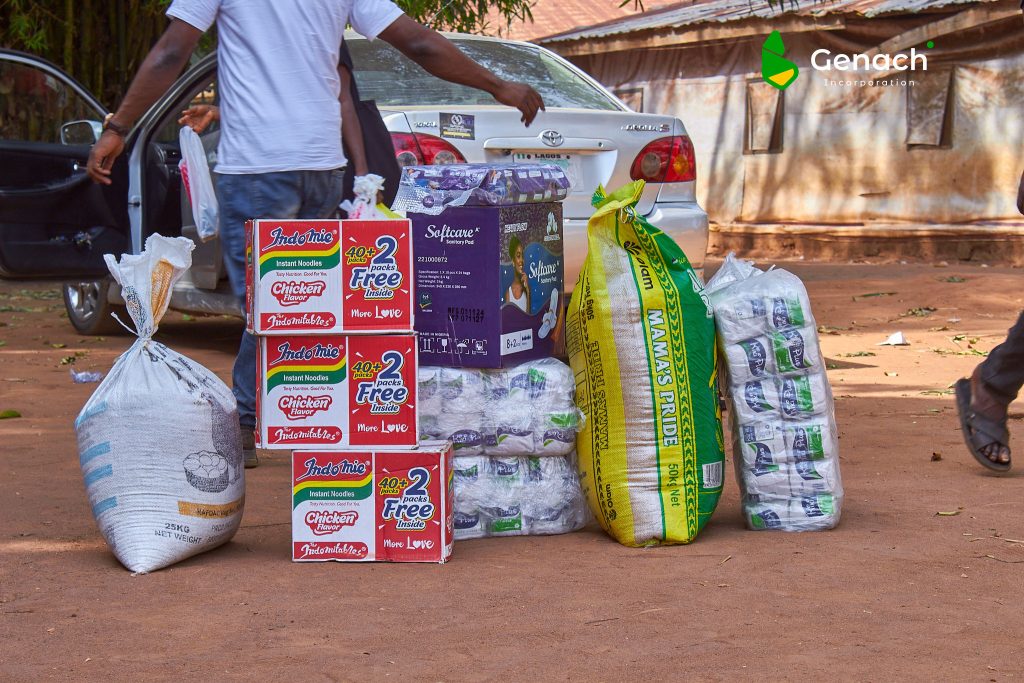
Reach-Out 360 – IDP Camp in Benin City On the 30th of November, 2024, Volunteers from all walks of life joined us to support and uplift the displaced individuals in the IDP CAMP in Benin city, ensuring they received the care and attention they needed. The event included a comprehensive medical section, where camp residents received healthcare services, medication, and counseling. Children and teens were divided into specific groups for tailored activities, including hygiene lessons and drug awareness education, ensuring that they are well-equipped to take care of themselves in challenging environments. As part of our empowerment initiative, 20 women were trained on how to create plantain chips, providing them with a sustainable skill to help improve their livelihoods. The event also featured a friendly and novel match between the IDP campers and Genach Incorporation, offering a unique bonding experience. Additionally, we organized a hair-cutting and washing session for the children, ensuring they felt refreshed and cared for. It was a day filled with fun, learning, and community spirit as we worked hand-in-hand with the IDP camp residents to make a positive impact in their lives. At Genach Incorporation, we remain dedicated to creating and offering value while empowering those in need, fostering growth, and providing opportunities to create a brighter future for all.

Reach-Out 360 Read More »

Genach Awarded Scholarship

GENACH AWARDED SCHOLARSHIP TO STUDENTS IN FIVE VARIOUS SCHOOL IN EDO STATE DURING GENACH SCHOOL TOUR 2.0. Genach Incorporation is a non-governmental organization that create sustainable positive change through collaboration, innovation, and empowerment In a significant move to encourage continuous education in public secondary school in alignment with SDG 4, Genach incorporation embarked on a school tour to various public schools in Edo state namely: Edo Boys College, Oba Eware Secondary Schools, Ihogbe College and Idia College. Genach school tour 2.0 took place from 10th to 14th of October 2024.  It was a fulfillment of the promise made to students whose performance were excellent in a debate competition during the Writing Symposium that took place on the 15th of May 2024. It was aimed at encouraging exceptional performance, fostering quality education and gearing up solid attitude towards education by awarding scholarship to top performed students. The scholarship covered tuition fee for Joint Admission and Matriculation Board, West Africa Examination Council (WAEC) and National Examination Council (NECO) exams at the Solid Education Center. The Impact of the award and Writing Symposium was evident in the response of awarded students, Principals, and parents of the awardees. Mrs. Antonia expressed her gratitude and also prayed for Genach for the strength to extend the kind gestures to various Children. Some students whose names are, Marvelous, Aisosa and Johnson mentioned in excitement that it was a dream come through for them. Aisosa remarked, “I have always prayed and expected winning a scholarship before graduating from secondary schools and here it is” In addition, The Principals expressed their excitement and stated that the scholarship will serve as a booster to those students who were not serious with their studies. The Principal of Idia College, Mrs. Jones, highlighted that the scholarship will bring relief and support to the parent of the awardees in this economic state of the country. The Principal of Edo Boys College highlighted that her students performed excellently in the recent WAEC and NECO exams, exceeding previous record by 45%. Sir S. A Mene, the founder of Solid Education Center and the major sponsor for Genach School Tour 2.0 spoke passionately about his commitment in promoting education by partnering with Genach incorporation for further event. Sir S. A Mene remarked, “ I grew up with my father whose passion for education coupled with determination travelled to the United Kingdom to obtain his first degree after giving birth to eleven children. He taught in both primary to secondary schools and later retired as a principal.” His father’s determination and the positive effect of education on individual and the society he witnessed as a child inspired him to choose the profession. He is an advocate of quality education, and one of the ways he advocates for it was by establishing SOLID EDUCATION CENTER and providing sponsorship for events that promote quality education. He highlighted that he will continue promoting quality education until will draw his last breath. This event provided support to beneficiaries and geared up the attitude of young adult toward education by awarding excellent performance and motivating other students to be well doing in their academics. In addition, it demonstrated the importance of giving back to the society and its positive effects in the life of young adults.

Genach Awarded Scholarship Read More »

The Writing Symposium

INVESTING IN THE FUTURE OF EDO STUDENTS. Genach Incorporation (Inc.), in a successful collaboration with the Edo State Government, and Ministry of Education recently hosted The Writing Symposium, a dynamic one-day event designed to ignite a passion for writing and equip teens and young adults (secondary school and university-bound students) with skills, explore their writing potential and discover pathways to monetize their talents. The event, held on the 15th of May, 2024 drew anticipating students of aspiring writers eager to explore the power of both creative and copywriting. The event kicked off with a dazzling red carpet arrival of participating schools, distinguished guests and prominent figures within and outside the state, including the Commissioner of Social Development and Gender issues, Hon. Christabel Omoh Ekwu, and Sir Amorigoye Sunny Mene, the Chairman/Chief Executive of Solid Education Integrated Concepts Ltd and the Proprietor of Solid Education Centre. The commissioner of Social Development and Gender issues delivered a powerful address emphasizing the critical role writing plays in students’ development, both academically and career wise. The highlight of the day were the insightful keynote speeches by: Prof. Emmanuel Akpe, a leading figure in the field of writing, shed light on the lucrative world of Copywriting, providing valuable insights and practical strategies for young writers interested in this specific writing genre. Rachel Fredrick, a creative writing expert, captivated the audience with her exploration of the boundless possibilities within Creative Writing. Her inspirational words sparked the imagination of aspiring novelists, poets, and storytellers among the students. An engaging Q&A session followed, fostering an interactive environment where young writers could address their questions and concerns directly to the experts. ATINÚKÉ UNVEILED. Ms. Fredrick further delighted the audience by unveiling her new book, ATINÚKÉ. The insightful review provided by Mrs. Patience Kayoma deepened the appreciation for Ms. Fredrick’s literary contribution. CHANGEMAKERS IN THE MAKING The excitement reached its peak during the presentation of award to the students and schools who earlier participated in a spoken word competition. Students from various institutions across Edo State were given a platform to showcase their creative prowess through captivating poetry presentations, and the guest of honours presented well-deserved awards to the winners, sponsored by KC Devices. The Chief Executive of Solid Education Integrated Concepts Ltd and the Proprietor of Solid Education Centre also hired all the participants WAEC, NECO and JAMB scholarships acknowledging their exceptional talents. The commissioner of Social Development and Gender issues delivered a powerful address emphasizing the critical role writing plays in students’ development, both academically and career wise. The highlight of the day were the insightful keynote speeches by: Prof. Emmanuel Akpe, a leading figure in the field of writing, shed light on the lucrative world of Copywriting, providing valuable insights and practical strategies for young writers interested in this specific writing genre. Rachel Fredrick, a creative writing expert, captivated the audience with her exploration of the boundless possibilities within Creative Writing. Her inspirational words sparked the imagination of aspiring novelists, poets, and storytellers among the students. An engaging Q&A session followed, fostering an interactive environment where young writers could address their questions and concerns directly to the experts. ATINÚKÉ UNVEILED. Ms. Fredrick further delighted the audience by unveiling her new book, ATINÚKÉ. The insightful review provided by Mrs. Patience Kayoma deepened the appreciation for Ms. Fredrick’s literary contribution. CHANGEMAKERS IN THE MAKING The excitement reached its peak during the presentation of award to the students and schools who earlier participated in a spoken word competition. Students from various institutions across Edo State were given a platform to showcase their creative prowess through captivating poetry presentations, and the guest of honours presented well-deserved awards to the winners, sponsored by KC Devices. The Chief Executive of Solid Education Integrated Concepts Ltd and the Proprietor of Solid Education Centre also hired all the participants WAEC, NECO and JAMB scholarships acknowledging their exceptional talents. CELEBRATING A NEW CHAPTER Culminating a momentous occasion, the Writing Symposium concluded on a high note, inducting esteemed individuals as Patrons and Matrons of the organization. With the cutting of a special cake, Genach celebrated its formal inauguration as a non-profit brand. A RESOUNDING SUCCESS! IMPACT MADE. The Writing Symposium was one of the greatest Educational events in Edo state. This proved our great mission of empowering the right resource for the right results. The collaborative effort between Genach Inc. And the Edo State Government, and other sponsors and partners provided a valuable platform for young writers to discover their voices, hone their craft, and explore the possibilities of turning their passion into a fulfilling career pursuit. The Writing Symposium wasn’t an end to itself. Looking forward, Genach Inc. marked a significant step towards empowering young writers in Edo State through support,  mentorship programs, and opportunities that will be available and made ready after the event. This is just the beginning!

The Writing Symposium Read More »

Scroll to Top