

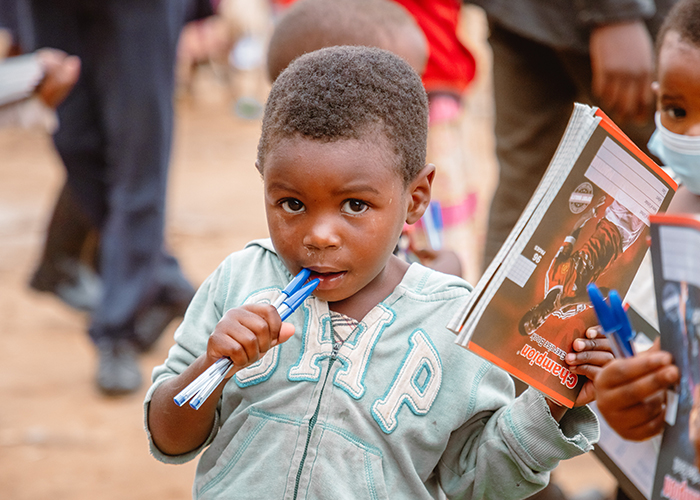
For some reason, whenever the word philanthropist comes up, people’s minds jump straight to billionaires signing cheques with enough zeros to make your head spin. The image is usually celebrities holding babies in rural villages for the camera.celebrities posing with oversized donation receipts, or the mega-rich setting up foundations in their names. And while those people have indeed given on a scale most of us can hardly imagine, reducing philanthropy to wealth alone is a mistake that makes a lot of ordinary givers shrink back from the word.
The word “philanthropist” comes from Ancient Greek, combining “philo-” (meaning “love” or “fond of”) with “anthropos” (meaning “humanity” or “humankind”). A philanthropist, at its core, is a lover of humanity, someone who expresses this love by donating time, money, or resources to help others and make the world a better place.
The truth is, philanthropy isn’t just about how much you give but how you give, and why. It’s less about the size of your bank account and more about the size of your heart. When someone pays the school fees of a neighbour’s child, volunteers to teach skills at a youth centre, or chooses to buy from a struggling small business instead of a big supermarket, that, too, is philanthropy. They may never be on magazine covers or trending hashtags, but the impact is still real.
In fact, some of the most powerful philanthropy has come from people who were never rich. Communities that band together to rebuild after a flood. Teachers who spend their own salaries on chalk and books. Parents who open their homes to children that aren’t theirs. These acts don’t look like grand gestures in the newspapers, but they stitch the social fabric tighter than any big cheque ever could.
Why We Think Philanthropy Belongs to the Rich
Psychologically, people are wired to associate impact with visibility. When we see a wealthy person donating publicly, the sheer size of the gift impresses us. It makes us equate “big numbers” with “big love.” But what we often forget is that true generosity isn’t about the amount, it’s about the sacrifice. For someone who earns a million dollars, giving away a hundred thousand might barely sting. For someone earning much less, offering even five dollars could mean skipping a meal. Yet, society tends to celebrate the first and overlook the second.
There’s also the “all-or-nothing” mindset. Many people think, “If I can’t give big, then my giving doesn’t matter.” It’s why people hold back from helping, assuming their contributions are too small to count. But here’s the paradox: it’s the accumulation of those “small” acts that builds lasting change. Think about community schools, women’s cooperatives, or local food drives. These movements weren’t started by billionaires; they were born out of everyday people pooling little bits of love and resources together.
Why This Shift in Thinking Matters
When we only see philanthropy as the territory of the rich, we rob communities of ownership. We also rob ourselves of the chance to participate in shaping change. Social psychology calls this the “bystander effect”: when people assume someone else (often someone wealthier or more powerful) will step in, they feel less responsible for helping. But when you flip that mindset,when you realize that your small, steady contribution is philanthropy, you start to act differently. You start to believe you can move the needle.
So, Who Is a Philanthropist?
It’s the grandmother, the taxi driver, the retired teacher, the student who donates their lunch money to help a friend, the family who chooses to spend weekends volunteering. It’s you, when you choose to invest time, money, or energy into making someone else’s life better.
At Genach Incorporation, we believe philanthropy isn’t about waiting until you’re rich or famous enough to make a splash. It’s about practicing love of humanity in your own lane, in your own way, with what you have. The truth is, the most transformative change often starts small, and often starts with ordinary people refusing to sit it out.
So, the next time you hear the word philanthropist, don’t shrink back. You don’t need a billion-dollar foundation to earn the title. Sometimes, all it takes is a heart willing to give.
HOW TO CHANGE THE WORLD: ONE PERSON CAN MAKE A LASTING IMPACT.
“Be the change you wish to see in the world.” Most of us have heard this quote by Mahatma Gandhi and perhaps even been inspired by it. It’s a beautiful sentiment and one that reminds us how everyone has the power to make an impact. Whether it’s by volunteering at a food bank, starting a nonprofit, or caring for your kids, what you do today can lead to lasting change.
But sometimes when we hear about so many global issues on the news, it can be difficult to believe that just one person can make a difference. Luckily, social change doesn’t have to happen instantly or on your own. By working together with your community to change lives one day at a time, your actions can have a meaningful impact.
If you’re interested in making the world a better place, read on to discover how one person can change the world and what makes a social change project successful. Then, discover a few tips on how you can change lives for the better.
How Much Can We Really Make an Impact in Our World?
For as long as humans have been around, we’ve been asking ourselves questions about our purpose in life and how we can best fulfill it. These existential questions seem to be a part of human nature and often drive people to start social innovation projects so they can leave a meaningful mark on the world. But sometimes, it’s hard to see what difference one person can make and how we can help our local and global communities.
Even if you’re not trying to solve world hunger or global warming, brainstorming ways to help your community can make a big difference. When we help others, it doesn’t stop with us. Studies have found that when we help others, those around us are more likely to help, too. This means that the more we give our time or resources to the issues we care about, the more others will give in return. In that way, one person’s actions really can change the world for good.
Want to Know How to Change the World? Start with One Person
At some point in our lives, most people find themselves declaring, “I want to change the world.” We are all hardwired to help others, and altruism is a part of what it means to be human. This is what causes people to volunteer or dedicate their lives to something greater than themselves.
But meaningful or effective change isn’t always instant nor is it large-scale. Real impact can take months or years, and making the world a better place often means bettering it for a few people at a time. Every time you change just one person’s world, you’re starting a butterfly effect with the potential to improve lives for generations to come.
What Made People Who Changed the World Successful?
When we look at the people who truly left a mark on the world, it’s tempting to believe they had something the rest of us don’t, extraordinary talent, money, or influence from the start. But if you really trace their stories, what stands out isn’t perfection, it’s persistence. Many of them started with very little. What they had was conviction, the willingness to try, and the courage to keep going even when things didn’t work out the first time.
And most importantly, they understood that impact doesn’t always look like loud, dramatic headlines. Sometimes it’s quiet, steady work, teaching one child, mentoring one young person, building one small program that slowly grows into something much bigger than they imagined. The ripple effect of small, consistent actions is often what history remembers as “world-changing.”
At Genach Incorporation, this is exactly what we believe in, ordinary people, doing what they can, right where they are, creating extraordinary change over time. You don’t need to wait for perfect conditions to start. You don’t need to be “ready.” You just need to take one step. Join us, and let’s make that step together.

